

Reading Time: est. 20 minutes
On this page
The best books about self-discovery include Man’s Search for Meaning by Viktor Frankl, The Untethered Soul by Michael A. Singer, and Let Your Life Speak by Parker Palmer— but the right book depends on where you are right now. Self-discovery books differ from self-help books in one key way. Self-help assumes you know what you want. Self-discovery is for when you’re not sure who you are yet. This list organizes 20 books by your current situation so you can find the one that belongs in your hands today.
| Book | Best for |
|---|---|
| Man’s Search for Meaning | Questioning whether your life has meaning |
| Four Thousand Weeks | Reckoning with mortality and what actually matters |
| The Untethered Soul | Quieting the inner noise that drowns out your real self |
| The Power of Now | Breaking free from habitual mental patterns |
| Let Your Life Speak | Career crossroads and listening for authentic calling |
| Designing Your Life | Practical career reinvention through small experiments |
| So Good They Can’t Ignore You | Building a career around what you’re genuinely skilled at |
| What Color Is Your Parachute? | Job changers who need practical, structured guidance |
| The Gifts of Imperfection | Letting go of who you think you should be |
| Emotional Agility | Getting unstuck from rigid emotional patterns |
| Flow | Discovering what genuinely engages and energizes you |
| Mindset | Shifting identity from fixed to evolving |
| Wild | Witnessing self-discovery through raw, lived story |
| Educated | Forming an identity beyond what you were raised to believe |
| Eat Pray Love | Permission to start over and find out what you actually want |
| The Alchemist | Finding your purpose through a parable |
| Siddhartha | Ancient wisdom on self-knowledge through lived experience |
| The Artist’s Way | Recovering a buried creative self through weekly practice |
| The Road Less Traveled | Spiritual growth through self-discipline and truth-telling |
| The Subtle Art of Not Giving a F*ck | Clarifying what actually matters— and what doesn’t |
What Makes a Book a “Self-Discovery” Book?
Self-discovery books and self-help books look similar on a shelf— but they’re solving different problems. Self-help assumes you already know what you want and helps you get there. Self-discovery is for when you’re not sure who you are yet.
Self-help assumes you know what you want. Self-discovery is for when you don’t know who you are yet.
Different problem. Different book.
According to Wikipedia’s self-discovery definition, the process is “a process by which a person attempts to determine how they feel and what they want or value.” That’s a fundamentally different starting point than a productivity framework or a goal-setting system. If you pick up a productivity book when what you really need is to know what you’re optimizing for— that mismatch is frustrating in a particular way.
Here’s what most personal development reading lists get wrong: they blur this distinction badly. Atomic Habits is an excellent book. But it’s a habits book. It assumes you already know who you want to be. The books on this list don’t make that assumption.
Some books live in both categories. The organizing principle here is whether the book helps you understand yourself.
Self-discovery books work best when you bring questions.
With that in mind, here’s how to find the right book for where you are.
If You’re Questioning Whether Life Has Meaning
When the question shifts from “what should I do with my life” to “does any of this matter”— that’s a different kind of reading. Start here.
Man’s Search for Meaning
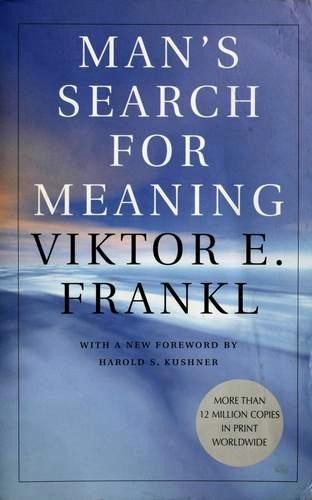
Viktor Frankl was an Austrian psychiatrist and Holocaust survivor. He developed logotherapy after surviving four Nazi concentration camps. The framework centers on meaning-seeking as the primary human drive. And it came from the hardest possible test of whether meaning can be found.
Man’s Search for Meaning is both memoir and theory. Frankl argued the primary human drive is the search for meaning— not pleasure (as Freud argued) or power (as Adler argued). He tested that argument in conditions where every other freedom had been stripped away. And in the most stripped-down possible conditions, one freedom remained.
His words: “Everything can be taken from a man but one thing: the last of the human freedoms—to choose one’s attitude in any given set of circumstances.”
Frankl is not for everyone. But if you’re in a genuinely dark place about meaning, no other book on this list reaches that depth.
Best for: Readers whose suffering has made them wonder what any of it is for.
Four Thousand Weeks
Four Thousand Weeks by Oliver Burkeman starts with a math problem you’ve probably avoided: you have roughly 4,000 weeks to live. Most productivity advice treats this fact as irrelevant.
Burkeman argues for accepting that you can’t do everything with your time— and discovering what actually matters because of that constraint. Recognizing what you’d cut when time is genuinely finite reveals what you actually value. That’s a self-discovery move.
These books can feel heavy before they feel clarifying. That’s part of how they work.
Best for: Readers who feel busy but untethered, or who can’t stop optimizing without knowing why.
If you’ve lost touch with yourself more than questioning meaning, the next section is more useful.
If You’ve Lost Touch With Yourself
Some people don’t know what they want because they’ve never stopped long enough to hear themselves. The Untethered Soul and The Power of Now are both books about getting quiet enough to find out.
The Untethered Soul
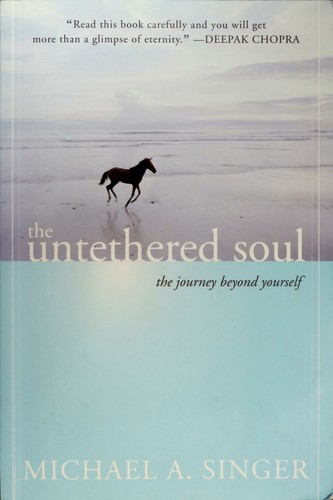
The Untethered Soul asks one question that most people have never actually sat with: who is the one observing your thoughts— and is that who you actually are?
Michael A. Singer teaches readers to stop identifying with the inner commentator and find the awareness behind it. That’s the self-discovery mechanism— noticing what’s doing the thinking. You’ve probably had the same argument in your head for the fortieth time. That’s exactly what this book addresses.
(Yes, it was an Oprah Book Club pick. That makes some people skeptical. I’d argue it earns the recommendation on its own merits, well apart from that association.)
Singer’s central question is one of the most useful self-discovery prompts I know. It’s practical.
Best for: Readers who feel like their head is too loud. Readers who can’t tell their own voice from their fears.
The Power of Now

The Power of Now by Eckhart Tolle argues that most suffering comes from living in thoughts about the past or future, not present experience. The core claim is simple: the voice in your head is not you.
Dense in places, but short chapters make it workable in small doses. Tolle’s framing of the “now” is a claim about where identity actually lives.
Best for: Readers who have tried journaling or therapy and still feel like they’re watching their life rather than living it.
If a career doesn’t fit, or you’ve been living someone else’s priorities, the next section is where to start.
If You’re at a Career Crossroads
Career crossroads are usually where self-discovery work becomes urgent. These books give you frameworks for figuring out what’s actually true about yourself and what kind of work fits it. They go well beyond the usual “follow your passion” advice.
Most career books treat the question “what do I want to do?” as if you already know the answer. Palmer and Burnett/Evans both start earlier than that.
Let Your Life Speak
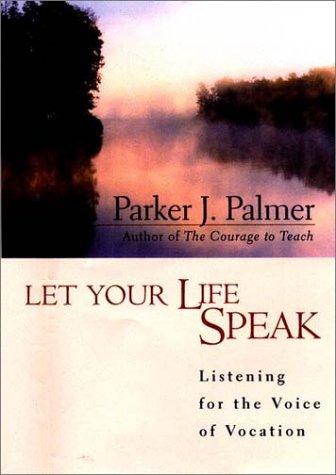
Parker Palmer is a Quaker educator and author whose work on vocation has reached well beyond religious contexts. His core premise: your life is already speaking to you through what gives you energy, what depletes you, and what patterns keep recurring.
Palmer shares his own experience of severe depression— sharing it as evidence that inauthenticity has real costs. What his depression revealed was that he’d been living someone else’s version of a meaningful life. He said it plainly— “Before I can tell my life what I want to do with it, I must listen to my life telling me who I am.”
This book is the clearest guide I’ve found for what self-discovery actually involves— listening over achieving.
Start with Let Your Life Speak if you’re in genuine vocational uncertainty. Don’t read Palmer and Burnett/Evans simultaneously. Palmer first.
Best for: Readers who feel called to something but aren’t sure what. Readers in vocational discernment.
Designing Your Life
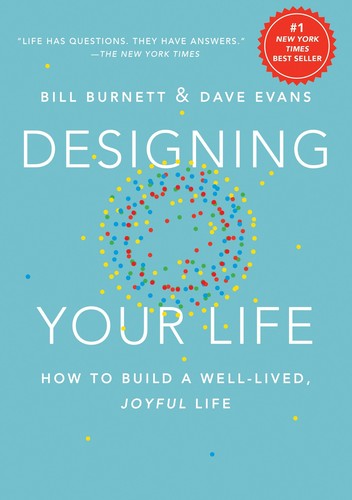
Designing Your Life by Bill Burnett and Dave Evans applies Stanford design thinking to life and career decisions. It’s the most practically structured book on this list.
The key tool is prototyping— trying out possible futures through small experiments rather than betting everything on one big choice. Their “workview” and “lifeview” frameworks surface what you actually value.
Best for: Career changers who want to act. Readers who want structure and a practical framework.
So Good They Can’t Ignore You
So Good They Can’t Ignore You by Cal Newport makes a deliberately contrarian argument: passion follows mastery, not the reverse. But the self-discovery angle is this— the book helps readers identify what they’re actually good at, versus what they’ve been told to want. That’s a different question, and a more honest one.
Best for: Readers skeptical of “follow your passion” advice. Readers who want to build genuine career capital first.
What Color Is Your Parachute?
What Color Is Your Parachute? by Richard Bolles, updated annually for decades, is the most practically-focused book on this list. Its “Flower Diagram” values-and-skills inventory surfaces what work situations actually fit the reader. Any recent edition works.
Best for: Readers in active job transition who need structure alongside self-reflection.
For the bigger picture of how to know yourself, going deeper than career alone, that’s worth exploring alongside this list.
Career crossroads often involve a deeper layer— the “should” machine that tells you who you’re supposed to be. That’s the next section.
If You’re Stuck in “Should” and Inauthenticity
The “should” voice runs a continuous audit of whether you’re being successful, impressive, or acceptable enough. It’s one of the biggest obstacles to self-discovery. These two books go directly at it.
The Gifts of Imperfection (research-backed)
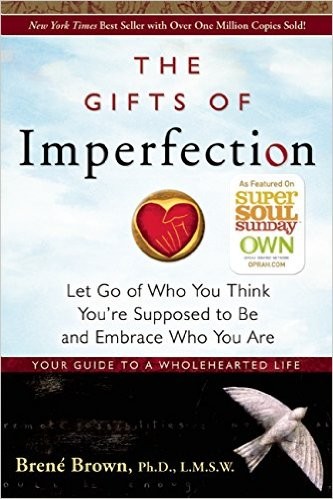
Brené Brown is a research professor at the University of Houston. The Gifts of Imperfection is based on thousands of interviews.
Brown’s research found that “wholehearted living” requires letting go of the “hustle for worthiness”— the performance of a self that earns approval. You accomplish something, then immediately move the goalpost. Never quite satisfied. Brown’s research found that the gap between who you are and who you’re performing is the source of exhaustion and disconnection.
You can’t see yourself clearly when you’re auditioning for your own life.
If you want to go further with Brown’s work, Daring Greatly and Rising Strong extend the framework. But start here.
Best for: Readers who feel like they’re always performing. Readers who can’t distinguish what they want from what looks good.
Emotional Agility (research-backed)
Susan David is a Harvard Medical School psychologist. Emotional Agility was named Harvard Business Review’s Management Idea of the Year.
David’s concept: emotional agility is unhooking from difficult thoughts and feelings rather than being ruled by them. Show up. Step out. Walk your why. Move on. Her four-step process is both a self-discovery practice and a career-change skill. When you’re emotionally hooked, you cannot see yourself accurately. The book is a defog tool.
Both books are worth reading in sequence— Brown for the framework, David for the practice.
Best for: Readers who want the psychology-backed version. Readers who get stuck in their own heads.
If the “should” problem is less about identity and more about not knowing what actually lights you up— the next section takes a different approach.
If You Want to Understand What Actually Engages You
These two books give you research-based tools for finding out what actually engages a person. That’s the core task.
Flow (research-backed)
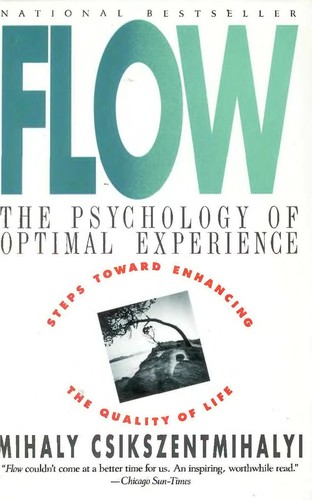
Mihaly Csikszentmihalyi was a Hungarian-American psychologist at the University of Chicago. Flow is based on 30 years of experience sampling studies— researchers beeped participants at random intervals and asked what they were doing and how engaged they felt. Thirty years of that.
The self-discovery mechanism: activities that produce flow reveal what genuinely engages you. One implication of this research: flow activities are a map of authentic engagement— what actually absorbs you when you’re in it. What pulls you in without effort. That’s the map.
Best for: Readers who want to discover themselves through observation of experience rather than introspection.
Mindset (research-backed)
Mindset by Stanford psychology researcher Carol Dweck might be the most important prerequisite for any self-discovery work. Here’s why: you can’t see yourself honestly with a fixed identity to protect.
A fixed mindset is the belief that your traits are permanent. That belief makes honest self-assessment impossible. Dweck’s research found that the mindset can be changed deliberately through awareness and practice. And that shift from fixed to growth makes everything else on this list more accessible.
Best for: Readers who feel stuck in an identity that doesn’t fit— but can’t quite change it.
Some people don’t need frameworks. They need a story. The next section is for them.
If You Learn Better Through Story
Some readers don’t want a framework. They want to watch someone figure it out. That’s what memoir does. You read Wild or Educated and something in you says yes, that’s what this feels like— and that recognition is the discovery. These books show self-discovery happening, which can be more useful than reading about it.
If you’re looking for books to find yourself and you assumed that meant non-fiction only— think again.
Memoir is the only format where the author can’t tidy up the process. You see the mess, the wrong turns, the version of discovery that didn’t work before the one that did. That’s what makes these books useful for self-discovery in a way frameworks sometimes aren’t.
Wild

Wild by Cheryl Strayed shows what finding yourself actually looks like when you’re doing it wrong as often as right.
After her mother’s death, a divorce, and years of self-destruction, Strayed hiked the Pacific Crest Trail alone. 2,650 miles. Largely unprepared. There’s no cleaned-up resolution. Just a woman putting one foot in front of the other until something clarifies.
Best for: Readers who need permission to be a mess while figuring themselves out. Readers grieving a version of themselves.
Educated
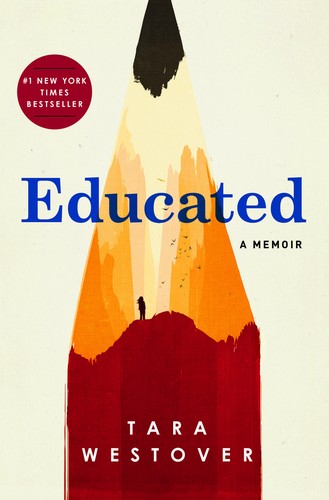
Educated by Tara Westover is underrated as a self-discovery book specifically. Westover asks a question most people skip: what do I actually believe about myself, separate from my upbringing? She grew up in a survivalist family without formal education and eventually earned a PhD from Cambridge. The identity formation she describes is some of the most honest writing on the subject.
Best for: Readers wrestling with inherited identity— family expectations, religious background, or the question “who would I be if I’d grown up differently?”
Eat Pray Love
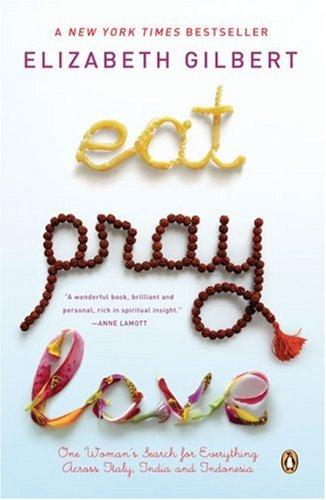
Eat Pray Love by Elizabeth Gilbert became a cultural punchline. But for people at real crossroads (post-divorce, post-burnout, genuinely wondering if a different life is available), it’s actually useful. The point is the permission structure: giving yourself the right to start over and find out what you actually want.
Best for: Readers who need permission to change.
The Alchemist
The Alchemist by Paulo Coelho is a fable— you can read it in a day. But its question (“what is your Personal Legend?”) takes much longer. Millions have read it as a self-discovery guide precisely because that question is the one everyone actually has.
Best for: Readers who want story without the density of memoir. Readers in early-stage questioning.
Siddhartha

Siddhartha by Hermann Hesse is not a comfortable book. Its protagonist tries asceticism, wealth, spiritual teaching, sensory indulgence— every system— and none of it is the answer. Hesse wrote it in 1922, but if you’ve cycled through frameworks and still feel like none of them quite fit, it reads like it was written for you.
Best for: Readers who’ve tried several approaches and are skeptical of any system that promises the answer.
The books in the next section are a different kind of reading— they’re also practices.
If You Want a Practice
These books require participation.
The Artist’s Way
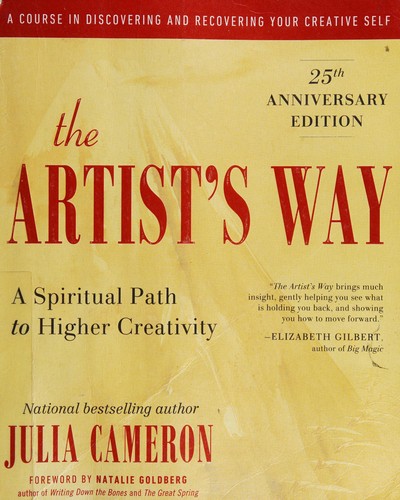
The Artist’s Way by Julia Cameron is a 12-week program. Two core practices: morning pages (3 pages of stream-of-consciousness writing, every morning, no editing, no reading back) and artist dates (solo time doing something that interests you, weekly).
The self-discovery happens in the practice. Morning pages work because showing up daily to write honestly is itself the discovery. The Artist’s Way requires a real 12-week commitment. Which is exactly why it works. And why most people don’t finish it.
Best for: Readers who have stopped creating, playing, or pursuing what used to feel essential. Readers in creative recovery.
The Subtle Art of Not Giving a F*ck

The Subtle Art of Not Giving a F*ck by Mark Manson is more self-discovery than the title suggests. The core exercise: clarifying what you actually choose to give energy to. That turns out to be harder and more revealing than it sounds.
And this is the book for readers whose “should” comes from external pressure rather than shame. Brown handles the shame version. Manson handles the overwhelm version.
Best for: Readers who feel obligated to care about too many things. Readers trying to clarify what actually matters.
The Road Less Traveled

The Road Less Traveled by M. Scott Peck opens with what might be the most honest sentence in the genre: “Life is difficult.” His framework centers on discipline as the prerequisite for spiritual growth— truth-telling and genuine self-honesty. Dense, but practical.
Best for: Readers who want spiritual depth without religious institution. Readers willing to be honest about their own avoidance.
For more self-discovery activities that complement these books, there’s more worth exploring there.
Books can open doors. But they work differently from most other reading.
How to Get the Most Out of Self-Discovery Reading
Self-discovery books work differently from books you read for information. The insight is what surfaces in you while you’re reading.
Read slowly.
- Read for 30 minutes with reflection. These books aren’t meant to be consumed quickly. Slow down enough to notice your own reaction.
- Keep something to write in nearby. Use self-discovery questions to work through as you read— your reaction to the book is often the data.
- Go back to the sections that made you uncomfortable. That’s almost always where the useful material is.
- Read one at a time, fully. Each book needs space. Don’t spread yourself across several at once.
The question to bring to any self-discovery book: where does this hit resistance in me— and why?
A few questions come up often when people are choosing from this list.
Frequently Asked Questions
What is the #1 book for self-discovery?
There’s no single #1— and any list that names one is usually defending a popularity ranking, not a real recommendation. That said, Man’s Search for Meaning, The Untethered Soul, and Let Your Life Speak are the most frequently recommended starting points across community forums and practitioner lists. Which one you need depends on where you are right now. The At a Glance table at the top of this article is built to help you choose.
Are self-discovery books the same as self-help books?
No. Self-help assumes you know what you want and helps you achieve it. Self-discovery is for when you don’t know who you are yet— your values, what motivates you, what kind of life would actually fit. Some books live in both categories, but the books on this list are specifically chosen because they help you understand yourself.
What are the best self-discovery books for someone changing careers?
Designing Your Life by Burnett and Evans, Let Your Life Speak by Palmer, and Emotional Agility by Susan David are the most directly useful for people at a career crossroads. Designing Your Life gives you a methodology. Palmer gives you a listening framework. Emotional Agility helps you get out of your own way.
What self-discovery books are backed by research?
Flow (Csikszentmihalyi, 30 years of experience sampling studies), Mindset (Dweck, Stanford), Emotional Agility (David, Harvard Medical School and HBR), and The Gifts of Imperfection (Brown, University of Houston) all rest on academic research foundations. These are the four to reach for if you want the research-backed self-discovery books on this list.
How long does it take to read these books?
Most are 200-300 pages and readable in a weekend. But they work best read slowly, with reflection. A book that takes you four weekends to finish because you kept stopping to write things down is probably doing more for you than one you blazed through in an afternoon. New to Audible? You can start a membership trial and listen to it.
The Best Self-Discovery Book Is the One You Need Right Now
You don’t need to read all of these. You need the one that fits where you are.
Look back at the section that matches your situation. Pick the first book listed there. Start with that one.
The right book changes as you change. What doesn’t help now might be essential later— that’s how this kind of reading works. There’s no fixed curriculum. The path is squiggly. It’s a self-discovery journey that keeps asking different questions at different stages.
I believe in you.
One book. One situation. Start there.