

Reading Time: est. 20 minutes
On this page
Most people don’t pick up a self-discovery book because they feel inspired. They pick one up because something feels wrong and they can’t quite name it. Maybe they keep making choices that don’t fit. Maybe they’ve built a life that looks right from the outside and feels hollow from the inside. Something has to change, and they just don’t know what yet.
The best self-discovery books are Man’s Search for Meaning by Viktor Frankl, The Untethered Soul by Michael Singer, and Let Your Life Speak by Parker Palmer. Between them they address the three questions self-discovery ultimately asks: why does my life matter, who am I beneath the noise, and what am I actually called to do? But the right starting point depends on where you are in the journey. This list organizes 14 of the best self-discovery books by reader type, so you can find the one that belongs in your hands right now.
There’s a meaningful distinction most reading lists skip. Self-help books assume you know what you want and need to optimize for it. Self-discovery books are for when you’re not sure who you actually are: your values, what motivates you, what kind of work would actually feel like yours. The right book for the wrong stage doesn’t help.
Most self-discovery reading lists fail because they’re organized by popularity, not by what the reader actually needs. Self-discovery books create conditions for you to hear yourself more clearly.
Here’s a quick look at all 14 books and who each one is best for. The full breakdown by category follows.
The 14 Books at a Glance
| Book | Best for |
|---|---|
| Man’s Search for Meaning | Anyone questioning whether their life has meaning |
| The Untethered Soul | Understanding who you are beneath the noise in your head |
| The Power of Now | Getting out of your own way and into the present |
| Four Thousand Weeks | Accepting your limits so you can get serious about what matters |
| Emotional Agility | Learning to navigate your feelings without being run by them |
| The Gifts of Imperfection | Letting go of who you think you should be |
| Mindset | Shifting from “this is who I am” to “this is who I’m becoming” |
| Flow | Finding what activities reveal who you actually are |
| Let Your Life Speak | Listening to your life instead of forcing a plan onto it |
| Designing Your Life | Career transitioners ready to prototype a new direction |
| The Artist’s Way | Recovering buried parts of yourself through creative practice |
| Educated | Understanding how identity is constructed and can be reclaimed |
| Wild | What you discover about yourself when stripped of everything familiar |
| The Alchemist | A story that makes the idea of a personal calling feel real |
Books That Reframe Self-Discovery — Foundational Reads
These books don’t start with you. They start with the human situation. What they share is this: before you can discover who you are, you have to reckon with the larger questions your life is sitting inside. These are the books that change how you think about self-discovery before you start looking for answers.
Man’s Search for Meaning
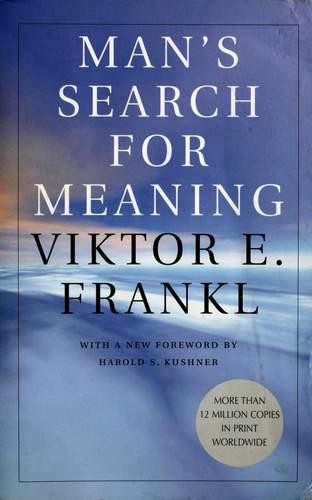
Of all the books on this list, Man’s Search for Meaning is the one most likely to permanently change how you think about self-discovery.
Viktor Frankl was a psychiatrist and Holocaust survivor. He wrote this book from inside the unimaginable, and the framework it contains (logotherapy, the premise that meaning is the primary human drive) is built from evidence few other books can claim. Logotherapy holds that the search for meaning, not pleasure (Freud’s view) or power (Adler’s view), is what drives human beings. Self-discovery, through this lens, is fundamentally about understanding what gives your life meaning.
Frankl identified three primary sources of meaning: work and deeds, love and relationships, and unavoidable suffering. That third one is the one people resist. But it’s also the insight that makes the book last.
It’s the book for when you can’t explain why you feel empty. When nothing is technically wrong and yet something is completely missing. The verified Frankl quote worth sitting with: “Everything can be taken from a man but one thing: the last of the human freedoms — to choose one’s attitude in any given set of circumstances.”
It’s for anyone asking “what’s the point?” and especially for people whose external life is fine but who feel empty anyway. The book is survivor testimony and psychological theory at the same time. Man’s Search for Meaning argues that meaning is the thing keeping you alive.
Four Thousand Weeks
Four Thousand Weeks does something rare— it makes your finite life feel like an asset instead of a threat.
Oliver Burkeman starts with a single uncomfortable number. The average human lifespan is roughly 80 years. That’s about 4,000 weeks. (The math checks out: 80 × 52 = 4,160.) Most people read that and feel the ground shift slightly. That’s the point.
The self-discovery angle here is counterintuitive. Burkeman argues that accepting what you can’t do, really accepting it as a fact, frees you to be serious about what actually matters. This is self-discovery through limits. You find out what you care about when you can no longer pretend you have time for everything.
Most people don’t want to confront their finitude. This book makes the confrontation feel worth having. This one is for high-achievers, productivity culture refugees, and people who feel like they’re always preparing to live rather than actually living.
The Power of Now

The Power of Now by Eckhart Tolle is spiritual teaching rather than academic research, so frame it accordingly. It’s been often recommended alongside mindfulness practices, and it belongs on this list.
The core teaching is that the present moment is the only place where self-knowledge is actually accessible. Most people are so absorbed in the voice in their head (the constant commentary, planning, regret) that they never encounter themselves beneath it. Tolle calls this the “pain body”: accumulated emotional pain that shapes behavior unconsciously. Readers either find that concept completely clarifying or entirely nonsensical. There’s almost nothing in between.
But it works for the right reader. This book is for people who know something is off but can’t identify what. It’s particularly useful for those whose self-discovery is being blocked by overthinking, anxiety, or constant forward-planning.
Once you’ve grappled with the big questions, the next set of books gets more specific about what’s happening inside you right now.
Books With Psychological Depth — Research-Backed Self-Knowledge
These books treat self-discovery as a learnable practice. Each is grounded in psychology, either research-based or clinically informed, and each gives you something concrete to work with.
The Untethered Soul
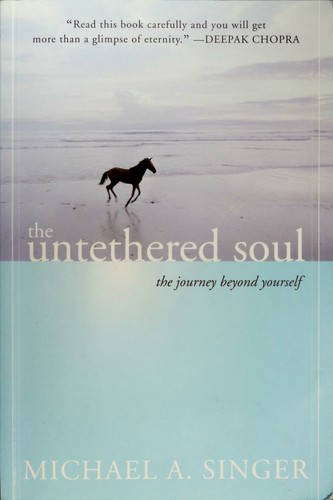
The Untethered Soul asks a question most people spend their whole lives avoiding: who is the one doing the observing?
Michael Singer’s book has sold millions of copies and is recommended by therapists and coaches across secular and spiritual traditions. It introduces “the inner roommate”: the voice in your head that never stops commenting. The one that’s been talking all day today. If you’ve ever spent 20 minutes rehearsing a conversation that never happened, you know what Singer is talking about.
The book operates in the space between spirituality and psychology. It’s clinically recommended, but frame it accordingly.
The core insight is that you are the awareness behind your thoughts. Self-discovery is recognizing the observer that’s been there all along, behind the noise. And this works with or without a spiritual framework, because you don’t have to believe anything specific to use it.
This book is for anyone who feels ruled by their internal monologue: overthinking, self-criticism, anxiety about how they come across.
Emotional Agility
Emotional Agility is underrated. It appears on fewer self-discovery lists than Brené Brown, but for most people it’s more practically useful.
Susan David is a Harvard Medical School psychologist with 20+ years of research on psychological flexibility, the ability to be with difficult emotions without being controlled by them. Her book identifies two patterns that block self-discovery. “Bottling”: suppressing emotions until they stop registering. “Brooding”: over-identifying with them until they run everything. Emotional agility is the middle path.
Her four-step framework (Show Up, Step Out, Walk Your Why, Move On) is among the most practically useful tools on this entire list. And the career-transition applications are direct. This is the book for people who know their emotional patterns are holding them back but don’t know how to change them.
The Gifts of Imperfection
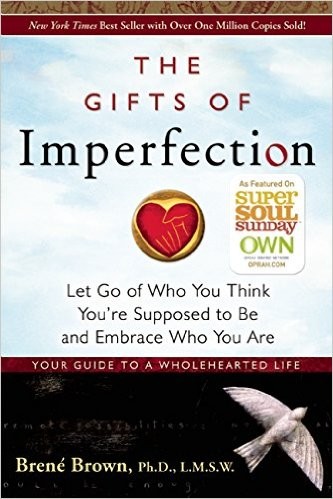
People pick up The Gifts of Imperfection expecting to be told they’re enough as-is. What they get instead is a challenge.
Brené Brown’s synthesis of her decade of qualitative research on shame and vulnerability makes a harder argument: most of what people think is authenticity is actually performance. The central concept is “wholehearted living,” which requires letting go of who you think you should be and embracing who you actually are. Brown distinguishes “fitting in” (changing yourself to belong) from “true belonging” (belonging to yourself first).
The verified Brown quote worth sitting with: “Authenticity is a collection of choices that we have to make every day. It’s about the choice to show up and be real.”
It’s for people whose self-discovery is blocked by the constant sense that who they actually are isn’t enough.
Mindset
Mindset by Stanford psychologist Carol Dweck is the mental scaffolding that makes the other books on this list work.
Dweck’s foundational research on fixed vs. growth mindset applies directly to self-discovery. A fixed mindset treats identity as settled: you are who you are. A growth mindset treats identity as a question: who are you becoming? Self-discovery work requires the second stance. Without it, readers will resist what every other book on this list asks of them.
Here’s what’s worth naming— the fixed mindset is a protection mechanism. The sting of realizing you’ve been treating yourself as a finished product is real. This book helps with that.
Read Mindset in conjunction with other self-discovery books. It’s the mental scaffolding that makes all the others work.
Flow
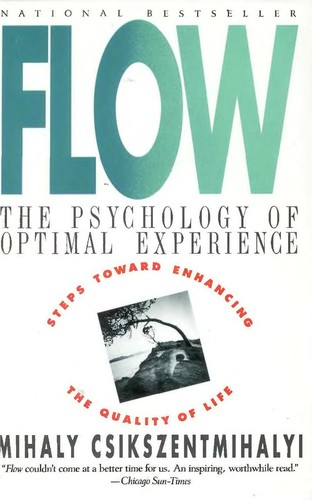
Flow by Mihaly Csikszentmihalyi, a positive psychology pioneer, offers a self-discovery approach rooted in observation rather than introspection.
Csikszentmihalyi’s research spans 30+ years on optimal experience: the state of complete absorption in a meaningful challenge. Flow requires matching skill level to challenge level, neither too easy (boredom) nor too hard (anxiety). But the self-discovery angle is what sets this book apart: what produces flow in you is data about who you actually are. Track which activities produce peak absorption and you have a map of your authentic interests and strengths. Doing reveals what reflecting can’t.
This one is for people who want self-discovery rooted in observation. If purely inward-looking books frustrate you, start here.
If you only read one book from this section, start with The Untethered Soul for inner awareness, or Emotional Agility for practical emotional tools.
Understanding yourself matters. But at some point, that understanding has to connect to what you do with your life.
Books That Point Toward Calling — Vocation and Direction
These are the books for when self-knowledge starts asking: now what? They connect who you are to what you’re called to do, and they’re the most useful category for anyone navigating a career transition.
If you’re in career transition, this is your category.
Let Your Life Speak
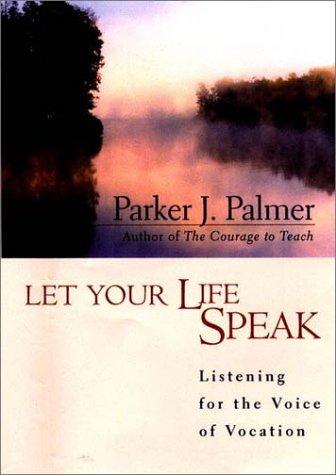
Let Your Life Speak is the most important book on this list for anyone asking the vocation question. Frankl’s book is better known, and Palmer’s is the one that helps most with the calling conversation.
Parker Palmer, an educator and vocational theologian, builds his entire framework around a simple premise: calling is something you uncover by listening to your life. His book’s central line captures it: “Before I can tell my life what I want to do with it, I must listen to my life telling me who I am.”
The people who need this book most are the ones who’ve been so focused on what they should do that they’ve stopped noticing what they actually want. Palmer connects self-discovery to vocation, the idea that calling emerges from listening to your life rather than constructing a plan for it. And he addresses the call toward right work along with the call away from wrong work. Both matter.
This is a short book, about 100 pages. It reads in a sitting. But it stays with you longer than books ten times its length.
For more on what your self-discovery journey actually looks like in practice, the TMM guide is a useful companion to Palmer’s framework.
Designing Your Life
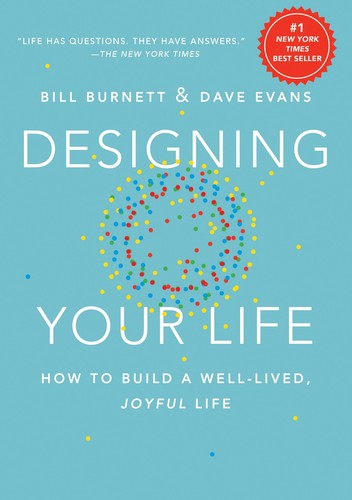
Designing Your Life by Bill Burnett and Dave Evans applies design-thinking principles (prototyping, iteration, reframing) to life and career decisions. They’re Stanford design professors, and the approach shows.
The central insight is that you don’t need to figure out your “one true calling” before you start. You prototype, test, and learn. Self-discovery and life design happen simultaneously. The Workview and Lifeview exercises are among the most practically useful self-discovery tools in print, and the course built around this material is consistently among the most popular at Stanford.
This is for career transitioners who feel paralyzed by the weight of getting it “right.” Design thinking replaces the pressure of the perfect decision with the freedom of the useful experiment. Name the fear: figuring this out will require blowing up your life. It usually doesn’t. That’s what this book is very good at demonstrating.
The Artist’s Way
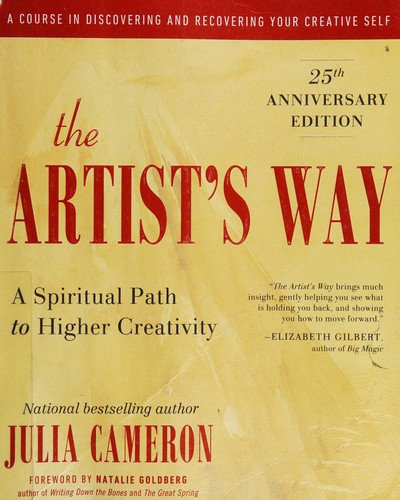
The Artist’s Way by Julia Cameron is a 12-week program, and that distinction matters. You do it.
The core practice is Morning Pages: three pages of longhand stream-of-consciousness writing daily, first thing in the morning. No editing, no rereading. Just writing. Over 4M copies sold since 1992, and Morning Pages is one of the most commonly prescribed practices by therapists and coaches.
Cameron’s argument is that many people have buried parts of themselves to meet external expectations. The Artist’s Way creates structured recovery for those parts. This book was designed for blocked creatives, but it works for anyone who stopped pursuing what lights them up.
It’s for people who have lost touch with what they actually care about, and who need a structured practice to commit to.
Not everyone learns from frameworks and research. Some people need to see themselves in someone else’s story first.
Books You Live Through — Narrative and Memoir
These books work differently. You don’t extract insights from them, you inhabit them. The self-discovery happens through identification: watching someone else navigate their identity forces you to confront your own.
Educated
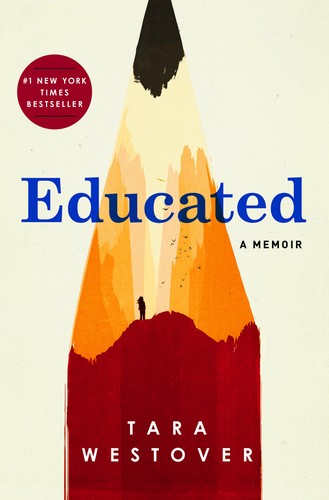
Educated by Tara Westover is the most honest book on this list about how identity is constructed, and how it can be taken apart and rebuilt.
Westover grew up in an isolated survivalist family with no formal education. She went on to earn a PhD from Cambridge. The memoir sits at the intersection of identity construction and self-determination: who we are despite the stories we inherit. It’s a #1 New York Times bestseller and has sold 5M+ copies.
The hardest part of this book is realizing that who you thought you were was someone else’s story.
This book is for people whose sense of self has been heavily shaped by family expectations, community, or inherited beliefs. The “constructed identity” question becomes viscerally real here in a way no framework book achieves.
Wild

Wild by Cheryl Strayed is the book for the person whose life has come apart and who isn’t sure whether to run from that or toward it.
Strayed hiked 1,100 miles of the Pacific Crest Trail alone, setting out after her mother’s death and the unraveling of her own life, and that hike carries the psychological journey inside the physical one. What do you learn about yourself when everything external is stripped away? The answer is uncomfortable, and that’s the point. The book was adapted into a 2014 film with Reese Witherspoon.
Uncomfortable, but necessary.
It’s for people in the middle of life falling apart, reading from inside it rather than from a safe distance. Also for people who process through physical experience rather than reflection.
The Alchemist
The Alchemist by Paulo Coelho is the only fiction on this list. And it earns its place, with tens of millions of copies sold and translations into dozens of languages.
It’s a fable about a Spanish shepherd who travels to find treasure and discovers that the journey is inseparable from the discovery. The concept of a “Personal Legend,” the idea that everyone has a unique calling they’re meant to pursue, is simple. But for readers who find purely analytical self-discovery approaches leave them cold, something in this story unlocks what the non-fiction couldn’t.
It’s a fable. Some readers find it deep. Others find it too simple. Either reaction is telling you something about yourself.
This one is for readers who need to feel the idea of a calling before they can think about it. Also a useful entry point for someone just beginning to ask these questions.
Fourteen books is a lot. Before you pick one, one more thing worth knowing about how these books actually work.
How to Get Something Real From These Books
Most people read self-discovery books the same way they read novels: front to back, passively, waiting for the insight to arrive. That’s the one approach that usually doesn’t work.
You read the whole book, nod along, finish it, put it down, and feel roughly the same two weeks later. That’s not a problem with the book.
A self-discovery book is something you do. Susan David’s research on psychological flexibility makes clear that the engagement you bring to the reading is the mechanism of change. The book creates the conditions. The work is what you do with what gets opened.
The people who get the most from self-discovery books are the ones who slow down and get uncomfortable with them.
A few ways to actually use them:
- Journal while reading: write down what’s coming up for you as you read. The Artist’s Way is explicitly built around this. Morning Pages take it further.
- Do the exercises: Designing Your Life and The Artist’s Way both require active participation. Reading them passively misses the point.
- Sit with discomfort: when a section lands strangely or triggers resistance, that’s usually where the useful information is.
- Discuss with someone: talking through what came up with a friend or coach accelerates what would otherwise take months.
You don’t need all 14. Pick one that matches where you are. Go deep. For the companion guide on what to do alongside your reading, see how to know yourself.
A few more questions people commonly have about self-discovery books.
Frequently Asked Questions
What’s the difference between self-discovery and self-help books?
Self-help assumes you know what you want and need to optimize for it. Self-discovery is for when you’re not sure who you actually are: your values, motivations, what actually matters to you. The distinction matters because the wrong book for the wrong stage doesn’t help. Most people who feel stuck are dealing with a self-discovery problem, not a self-help problem. They need to understand themselves better first. Susan David’s work on psychological flexibility is especially clear about this. Before you can act on your values, you have to know what they are.
What self-discovery book should I read first?
Man’s Search for Meaning by Viktor Frankl is the most universal starting point. It reframes what self-discovery even means before you start looking for answers. But the right first book depends on where you are. If you’re specifically navigating a career transition, start with Let Your Life Speak by Parker Palmer or Designing Your Life by Burnett and Evans. And if what’s blocking you is your own emotional patterns, if you know what you want but can’t seem to move toward it, start with Emotional Agility by Susan David.
Are there self-discovery books for career change?
Yes, and they’re a distinct category. Designing Your Life, Let Your Life Speak, and Emotional Agility directly address career purpose, vocation, and navigating change. These are meaningfully different from general self-discovery reading. They connect self-knowledge to direction. If you’re mid-career and questioning whether you’re in the right work, these three are the most directly useful books on this list.
Can memoirs count as self-discovery books?
Short answer: yes. Educated, Wild, and The Alchemist work because they place you inside someone else’s identity crisis. The reflection they provoke is the work, and the story is the method. Self-discovery doesn’t have to look like introspection. Sometimes you need to see yourself in someone else’s story before you can see yourself clearly.
Where to Go From Here
These books don’t work on their own. They work when you bring something to them: a real question, some willingness to sit with discomfort, and a commitment to actually reflect on what comes up.
Pick one book. Pick the one that matches where you are right now. If you’re questioning whether your life has meaning, start with Frankl. If you’re in the middle of a career transition and need something practical, start with Designing Your Life. If you’re feeling lost or uncertain about what comes next, that guide is a useful first step alongside any of these books.
The self-discovery doesn’t happen in the reading. It happens in what you do with what the reading opens up.
I believe in you.
If you’d rather start by listening: New to Audible? You can start a membership trial and listen to any of these books.